

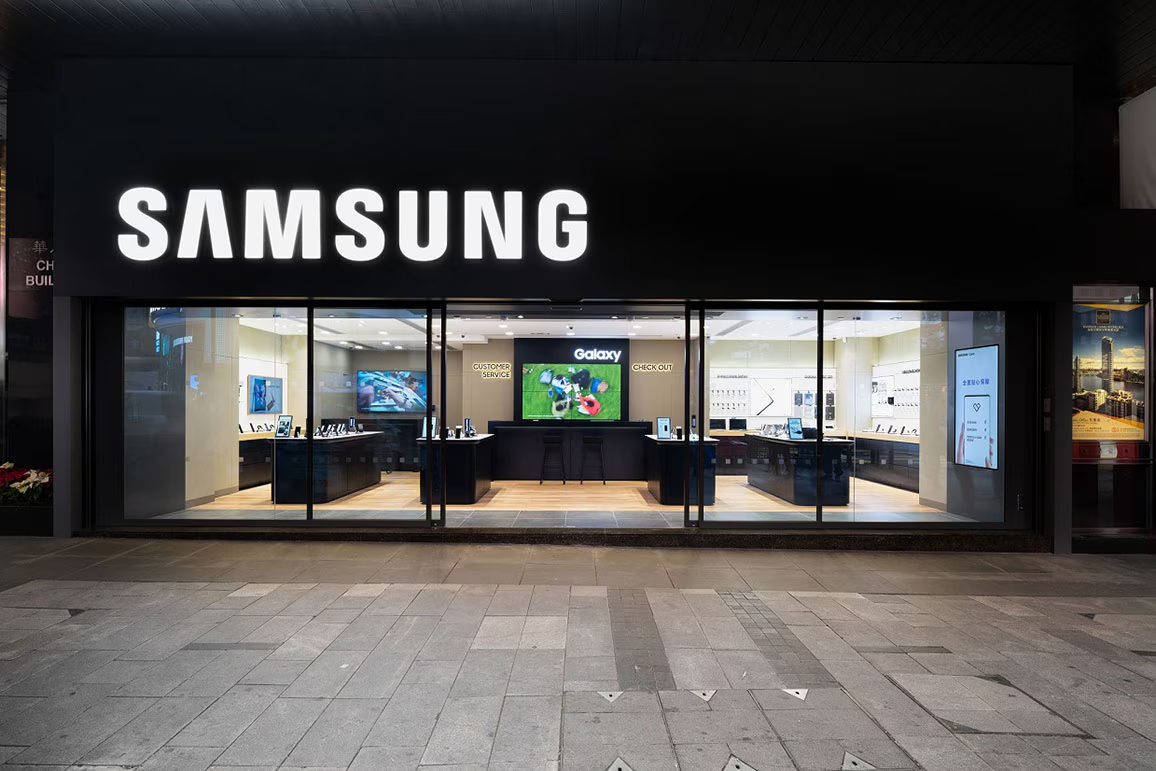
Introduction
Samsung Electronics (Samsung Electronics) stands today as one of the most influential technology companies not only in Asia, but globally. Headquartered in Suwon, South Korea, the company operates across a wide range of industries — from consumer electronics to semiconductors — and is widely recognized for its innovation, scale, and impact. Over decades, Samsung has built a reputation for combining advanced technology, quality manufacturing, and global reach, turning it into a flagship of Asia’s tech industry.
Company Background & History
Here’s a concise timeline and background of how Samsung Electronics evolved:
| Attribute | Details |
|---|---|
| Founded year | 13 January 1969 (as Samsung Electronics Industry Co., Ltd.) (Samsung Images) |
| Founders / Origins | Originates from Samsung Group, a conglomerate originally founded by Lee Byung‑Chull — though Samsung Electronics as its electronics-focused arm started in 1969. (Encyclopedia Britannica) |
| Key Milestones & Growth Timeline | – 1969: Electronics arm established (referenceforbusiness.com) – 1971: First export — black-and-white TV to Panama (referenceforbusiness.com) – 1978: Entry into semiconductors via creation of semiconductor & telecommunications subsidiary (referenceforbusiness.com) – 1984: Company formally renamed Samsung Electronics Co., Ltd. (Samsung Images) – 1988: Merged with semiconductor affiliate, integrating electronics and chip-making business. (referenceforbusiness.com) – 1992: Developed the world’s first 64M DRAM chip, signaling its seriousness in semiconductor innovation. (referenceforbusiness.com) – 1995–2000: Exports reached $10 billion; by 2000 sales at ~$26 billion with net profits of about $4.7 billion. (referenceforbusiness.com) – 2000s onward: Expansion into smartphones, TVs, displays, memory chips, and global consumer electronics. (Encyclopedia Britannica) |
| Nation (Headquarters) | South Korea (Suwon, Gyeonggi-do) (Samsung Images) |
This history shows how Samsung Electronics gradually transformed from a consumer-electronics manufacturer into a diversified technology powerhouse — combining home appliances, consumer gadgets, and advanced semiconductor manufacturing.
Products & Services
Samsung Electronics operates through several business units, offering a wide array of products and services:
- Consumer Electronics & Home Appliances — This includes televisions, monitors, refrigerators, washing machines, air conditioners, and other household appliances. These form part of Samsung’s legacy as a provider of everyday electronics. (Samsung Images)
- Mobile Devices & Smart Devices (Mobile eXperience) — Smartphones (the flagship Galaxy series), tablets, wearable devices (smartwatches, other wearables), and related devices. Samsung’s mobile range remains one of the most popular globally. (Encyclopedia Britannica)
- Semiconductors & Memory Chips (Device Solutions) — DRAM, NAND flash, mobile Application Processors (APs), and other chip technologies. This division supplies memory and processing power not only for Samsung’s own products but also to other manufacturers. (Samsung Images)
- Display Panels — Through its display-panel business (via subsidiary Samsung Display), Samsung produces OLED and QD-OLED panels for smartphones, TVs, monitors, laptops, and more. (Samsung Images)
- Automotive & Audio Components and Additional Systems — Through its acquisition of Harman International Industries, Samsung also participates in automotive electronics (e.g. car audio systems, digital cockpits), portable speakers, and other connected-device ecosystems. (Samsung Images)
- Networks, Medical / Health Devices & Other Systems — The “DX Division” also includes network system products and even health-related technology (medical devices / equipment), expanding Samsung’s footprint beyond consumer electronics. (Samsung Global Newsroom)
In short, Samsung’s product and service scope is vast — ranging from everyday home appliances and smartphones to advanced memory chips, high-end displays, and automotive electronics.
Business Model & How the Company Makes Money
Samsung’s business model is built on diversification and vertical integration, allowing it to earn revenue from multiple, complementary streams:
- Direct sales of consumer electronics and appliances — TVs, home appliances, monitors, smartphones, wearables, etc., sold worldwide through retail channels and brand stores.
- Component sales (semiconductors, memory, display panels) — Rather than only producing finished products, Samsung supplies core components (chips, memory, display panels) to other device manufacturers or uses them internally. This B2B (business-to-business) component business is a major revenue source — often high-margin and scalable.
- Licensing and ecosystem partnerships — Through acquisitions like Harman, Samsung enters automotive electronics and connected-device ecosystems, which adds recurring revenue via hardware sales, services, and integration with software or autonomous / smart-vehicle ecosystems.
- Research & Development and innovation-driven products — By investing heavily in R&D and launching cutting-edge devices (e.g. OLED displays, new DRAM, foldable phones), Samsung can command premium prices. This innovation-driven premium often helps offset volatility in more commoditized hardware.
- Global manufacturing and supply-chain scale — With manufacturing facilities and subsidiaries worldwide, Samsung achieves economies of scale and cost efficiencies, enabling it to compete on price and volume while maintaining quality.
Because of this diversified model, when one segment (like memory chips) faces cyclical downturns, other segments (like smartphones or appliances) can help stabilize the company — giving Samsung resilience against market fluctuations.
Global Presence & Expansion
Samsung Electronics is a truly global company. According to its own information: as of end of 2024, it employed around 262,647 people across 76 countries. (Samsung Global Newsroom)
The company operates via many subsidiaries and regional headquarters worldwide. Its organizational structure includes: the main headquarters in Korea, plus 226 subsidiaries globally, including regional HQs for both its Device eXperience (DX) and Device Solutions (DS) divisions. (Samsung Images)
Through its display-panel unit (Samsung Display), it runs production plants not only in South Korea but also in markets such as China, Vietnam, and India. (Wikipedia)
On the consumer side, Samsung products — smartphones, TVs, appliances — are sold in virtually every major market around the world, making Samsung a household name globally. Its semiconductor and component supply reaches device manufacturers across continents.
By combining local manufacturing, global distribution, and a network of subsidiaries and affiliates, Samsung has secured a dominant global footprint.
Achievements & Awards
Over its history, Samsung Electronics has garnered significant recognition and achieved many milestones:
- Its semiconductor division has been a pioneer — for example, in 1992 it developed the world’s first 64M DRAM chip, showcasing its technological leadership. (referenceforbusiness.com)
- Through the display business, Samsung Display has become one of the largest producers of OLED and QD-OLED panels globally, contributing significantly to the proliferation of high-quality screens in smartphones, TVs, laptops, and other devices. (Samsung Images)
- As a brand, Samsung is frequently recognized among the top global technology brands, with strong brand value. (Inyo Register)
- Beyond products, Samsung has built a substantial R&D presence, with dozens of research centers globally, which underpins its continuous innovation in hardware, semiconductors, displays, and more. (Samsung Global Newsroom)
Samsung’s breadth of markets — from home appliances to smartphone, semiconductors to automotive electronics — and its global operations give it a rare mixture of scale, diversity, and innovation.
Financial Highlights
Here are some recent financial highlights for Samsung Electronics:
- For the fiscal year 2024, Samsung reported consolidated revenue of KRW 300.9 trillion and operating profit of KRW 32.7 trillion. (Samsung Global Newsroom)
- As of the end of 2024, the company employed about 262,647 employees globally in 76 countries. (Samsung Global Newsroom)
- The company maintained a diversified business portfolio, including both consumer-facing electronics (smartphones, TVs, appliances) and B2B components (memory chips, displays, semiconductors). (Samsung Images)
These figures underline Samsung’s role as one of the largest and most financially robust technology firms worldwide.
Challenges & Future Outlook
Even giants like Samsung face challenges. Some of the major headwinds and future uncertainties include:
- Cyclical nature of semiconductor business: The memory chip and semiconductor markets tend to fluctuate significantly — demand swings, pricing pressure, and competition can impact profitability. In downturns, margins shrink. Samsung has historically seen such swings. (Encyclopedia Britannica)
- Intense global competition: In smartphones, displays, semiconductors — Samsung competes with other major players globally. Maintaining technological leadership requires sustained investment in R&D, manufacturing, and supply-chain efficiency.
- Need for constant innovation: As consumer tastes and technology trends evolve fast (e.g. foldable phones, AI-powered devices, next-gen displays), Samsung must stay ahead. This demands high R&D spending, which could strain resources if not balanced with market demand.
- Geopolitical and supply-chain risks: As a global manufacturer and supplier, Samsung is exposed to trade tensions, global supply disruptions, and shifting regulations.
At the same time, Samsung’s future holds promising opportunities:
- Expansion into next-gen technologies: With investments in semiconductors, memory, displays, and emerging areas like automotive electronics and AI, Samsung is well positioned to benefit from global demand for faster chips, smart devices, and connected systems.
- Diversified business model: Its spread across consumer electronics, components, displays, and automotive/connected devices may help buffer against downturns in any single area.
- Global demand for high-performance devices: As consumption of smartphones, smart appliances, wearable tech, and smart home/IoT grows worldwide, Samsung can leverage its broad portfolio to capture market share.
Conclusion
Samsung Electronics’ journey — from a humble South Korean electronics arm founded in 1969 to a global technology giant — is a testament to vision, adaptability, and relentless innovation. Over decades, the company has built a wide-ranging business: everything from TVs and refrigerators to cutting-edge semiconductors and smartphone displays.
Its diversified business model, global presence, strong R&D capabilities, and scale have allowed it to thrive across different markets and economic cycles. While challenges remain — particularly in cyclical segments like semiconductors — Samsung’s broad footprint and continuous push for innovation give it enduring strength.
In an era where technology evolves rapidly — with AI, 5G/6G, smart devices, and connected systems redefining how we live — Samsung Electronics is well placed to remain at the forefront. Its impact spans continents, homes, businesses, and industries. As long as Samsung continues to adapt and invest wisely, its role as Asia’s tech giant — and one of the world’s leading technology firms — is likely to endure for years to come.
| Informasi | Detail |
|---|---|
| Alamat | Korea Selatan, Incheon, Michuhol-gu, Yeonnam-ro, 35 5층 |
| Lokasi Dalam Gedung | Terletak di: LOTTE Department Store Incheon |
| Jam Operasional | Tutup · Buka pukul 10.30 |
| Situs Resmi | https://www.samsung.com/ samsungstore.com |
| Kode Plus (Plus Code) | CPV2+56 Michuhol-gu, Incheon, Korea Selatan |
Discover more from ACI News
Subscribe to get the latest posts sent to your email.

